Juana attempts to throw the pearl back into the sea
Juana attempts to throw the pearl back into the sea is the event in which Kino's wife, acting on her long-held belief that the pearl is a source of evil, tries to return it to the ocean, only to be intercepted and violently beaten by Kino. This moment is the story's sharpest turning point: it transforms Juana from a silent, supportive wife into a determined actor, and it reveals how completely the pearl has corrupted Kino's humanity, turning him against the person he loves most.
Juana's Growing Conviction and Her Decision to Act
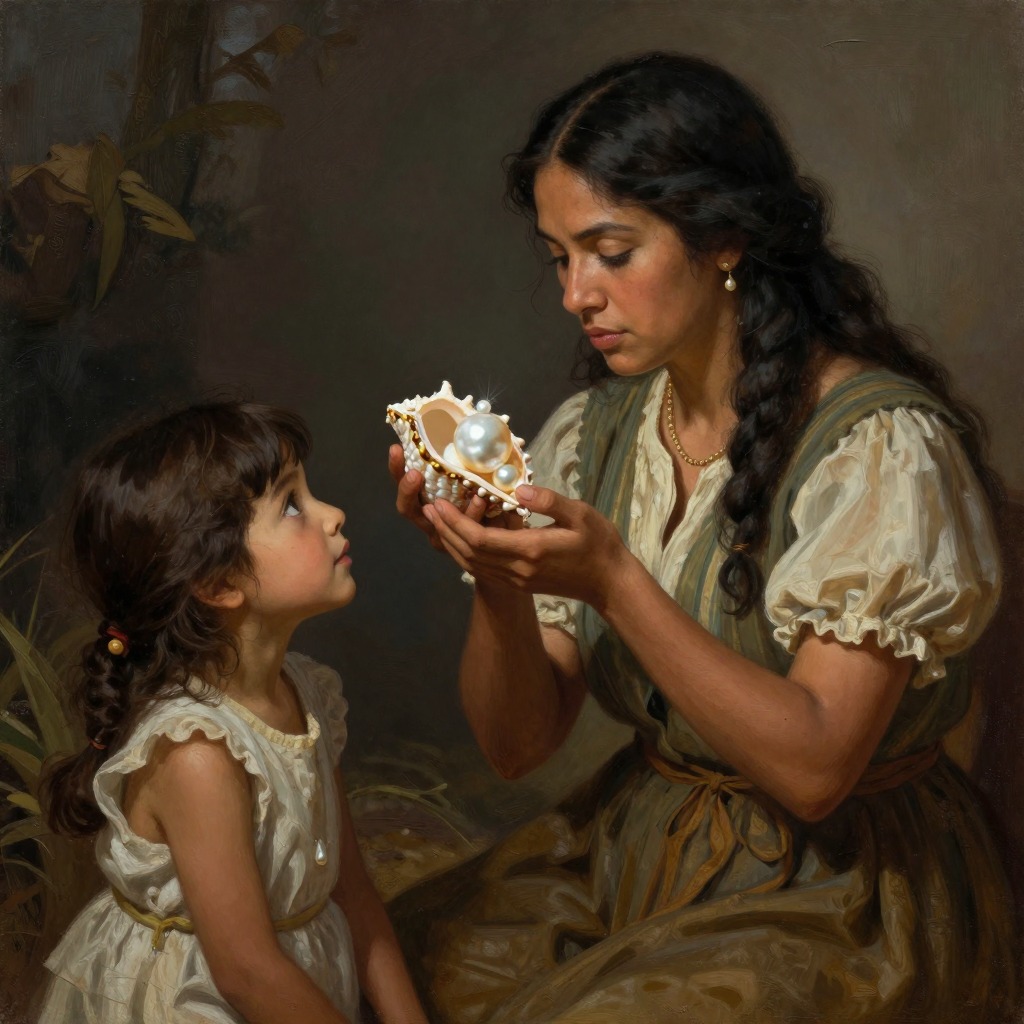
From the first night after Kino found the great pearl, Juana had warned him. "This thing is evil," she cried harshly. "This pearl is like a sin! It will destroy us." She begged him to throw it away, to break it between stones, to bury it and forget the place, to throw it back into the sea. But Kino's will was set; he saw the pearl as their one chance for Coyotito's education and a better life. After the first night attack on their house, when a dark figure crept in and Kino was struck on the head, Juana's fear deepened. She watched Kino bury the pearl under the sleeping mat, and when she asked whom he feared, he answered, "Everyone." The tension within her built until, in the late moon before the first rooster crowed, she made her move. She arose silently from beside Kino, moved to the fireplace, carefully shifted the stone where the pearl was buried, and then, like a shadow, glided toward the door. She paused beside the hanging box where Coyotito lay, then was black in the doorway, and then gone.
Kino's Pursuit and the Violent Confrontation
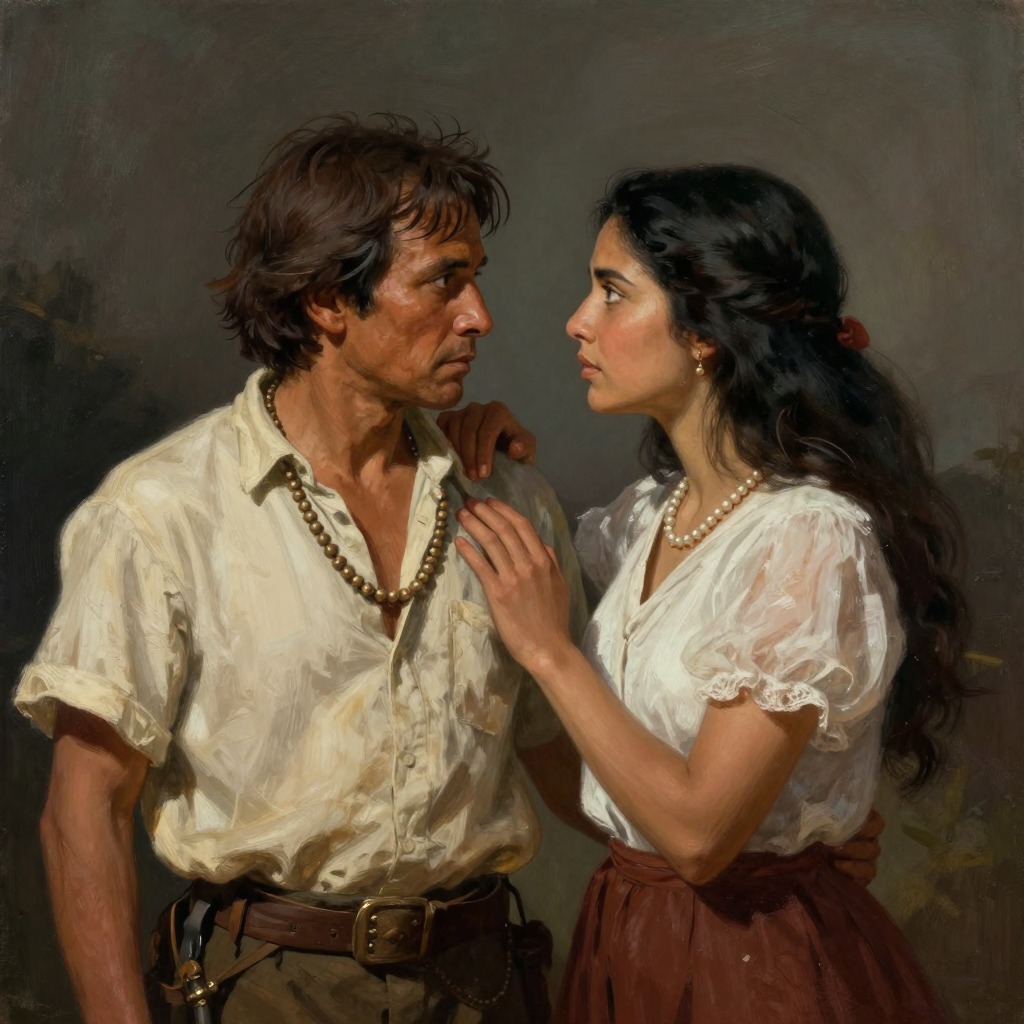
Kino's eyes opened in the darkness the moment he sensed movement. Rage surged in him. He rolled up to his feet and followed her as silently as she had gone, his brain red with anger. He could hear her quick footsteps going toward the shore. She burst clear out of the brush line and stumbled over the little boulders toward the water. When she heard him coming she broke into a run. Her arm was up to throw the pearl when he leaped at her and caught her arm and wrenched it from her. Then he struck her in the face with his clenched fist, and she fell among the boulders, and he kicked her in the side. In the pale light he could see the little waves break over her, and her skirt floated about and clung to her legs as the water receded. Kino looked down at her, his teeth bared, and hissed at her like a snake. Juana stared at him with wide, unfrightened eyes, like a sheep before the butcher. She knew there was murder in him, and it was all right; she had accepted it, and she would not resist or even protest.
Juana's Acceptance and the Aftermath
After the rage left Kino and a sick disgust took its place, he turned away and walked up the beach. Juana dragged herself up from the rocks. Her face was a dull pain and her side ached. There was no anger in her for Kino. He had said, "I am a man," and that meant certain things to Juana. It meant that he was half insane and half god. It meant that Kino would drive his strength against a mountain and plunge his strength against the sea. Juana, in her woman's soul, knew that the mountain would stand while the man broke himself; that the sea would surge while the man drowned in it. And yet it was this thing that made him a man, and Juana had need of a man; she could not live without a man. She climbed painfully to her feet, dipped her cupped palms in the little waves, washed her bruised face with the stinging salt water, and then went creeping up the beach after Kino. On the path she found the great pearl glimmering behind a rock, and she also found Kino lying beside a dead man he had just killed. In that instant, Juana knew the old life was gone forever. She abandoned the past instantly and devoted herself to saving them.
Thematic Significance: The Pearl as Sin and the Cost of Ambition
Juana's attempt to throw the pearl back into the sea is the story's clearest articulation of the pearl as a moral and spiritual poison. Her action is grounded in an ancient, practical wisdom that Kino, in his dream of a transformed future, has lost. The violence Kino inflicts on her—striking her in the face, kicking her in the side—is the most direct evidence of how the pearl has corrupted him. Earlier, when he struck the doctor's gate, his rage was directed at an oppressor; now it is directed at his wife, the person who embodies the Song of the Family. The event also echoes the colonial history that shapes the characters' world: the priest's sermon about staying in one's station, which Kino's people had heard for four hundred years, is the ideological counterpart to Juana's caution. She is not merely afraid of the pearl's danger; she is afraid of the ambition that would break the walls of their assigned place. Kino's refusal to listen, and his violent response, mark the point of no return in his journey from a man of the community to a man isolated by his own dream.